
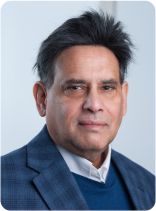
Prof K Ray Chaudhuri (UK)
(DSc, FEAN, FRCP(Edin), FRCP (Lond), MD)
Professor K. Ray Chaudhuri is Director of Research and Clinical Trials at Kings College Hospital, London Dubai .Ex- Professor of Neurology/Movement Disorders at King’s College Hospital and King’s College London and Ex-Director of the Parkinson Foundation International Centre of Excellence at King’s College Hospital in London. He is founder of MDS Nonmotor PD Study group (NMSG), Ex Chairman and now steering group of the Industry Engagement Committee, and Co Chair Task force of the Parkinson Wellness committee of the Movement Disorders Society (MDS) was a member of the MDS Congress Scientific Programme Committee (2013-2017) and is Founder -Editor-in-Chief of the njp Parkinson’s Disease, and current Editor Front. Aging Neurosci. - Parkinson’s Disease and Aging-related Movement Disorders and a founder member of Kings Parkinson’s Charity. He is advisor to NHS England, General Medical Council as well as Parkinson’s UK and Parkinson’s Europe. Professor Chaudhuri is the author of over 650 articles (Scopus listed) , with H index > 100, co-editor of 7 books on Parkinson’s disease and restless legs syndrome, and winner of the British Medical Association Book Awards commendation in 2015 and 2017. He is also the recipient of 2018 Jay Van Andel Award Outstanding Achievement in Parkinson’s Disease Research (pioneering holistic assessments and non-motor subtypes), as well as National Institute for Health Research/Royal College of Physicians award for outstanding research leadership in 2017. He was elected honorary member of the Movement Disorders Society in 2021, Honorary Professor Brasov University and received the UK NHS Gold merit award in 2021 for excellence in research and clinical service. In 2023 he was featured as “role model” in British Medical Journal. He has been a guest lecturer worldwide, including in Japan, China, Taiwan, Vietnam, Thailand, Singapore, Australia, India, Africa, the US, Russia, and Europe. In 2025 he is ranked within the top 2% of all scientists in the world (Stanford and Elsevier ranking ) and in 2024, an independent review in Frontiers journal by LI et al rated KRC as the one with most publications globally in nonmotor Parkinson’s since 2013 (Li et al , DOI 10.3389/fnagi.2024.1335550). He is a member of the Parkinson's UK project grants College of Experts member and reviewer of USA Congressionally Directed Medical Research Programs (U.S. Army Medical Research Acquisition Activity (USAMRAA) ) and NIH and Middle East grant programmes such as Dubai Health Authority and Saudi Arabia Grants Committee (RDIA grants programme).
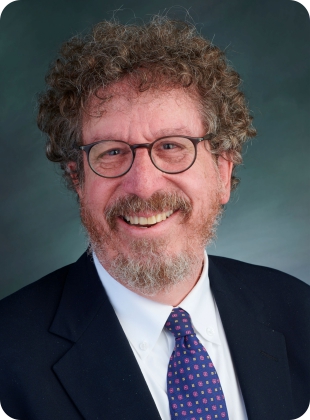
Prof Steven L Lewis (USA)
Steven Lewis, MD, is the current President of the World Federation of Neurology (WFN) and has been a WFN Trustee since 2014. Dr. Lewis is a graduate of Yale University, where he received his BA, magna cum laude, in Molecular Biophysics and Biochemistry. He received his MD at the Stanford University School of Medicine and performed his neurology residency at the University of Chicago. Dr. Lewis is Physician-in-Chief and Endowed Chair of Neurology at the Lehigh Valley Fleming Neuroscience Institute of Jefferson Health in Pennsylvania, USA; Adjunct Professor of Neurology at Thomas Jefferson University; and the Regional Chief for the Lehigh Valley for the Vickie and Jack Farber Institute for Neuroscience of Jefferson Health. Dr. Lewis is Past-Director and Past Chair of the American Board of Psychiatry and Neurology (ABPN) and a past Chair of the US Neurology Residency Review Committee of the Accreditation Council for Graduate Medical Education (ACGME). He is the immediate past Editor-in-Chief of Continuum: Lifelong Learning in Neurology, the official CME journal of the American Academy of Neurology (AAN). He is the Associate Editor for Global Neurology for the Journal of the Neurological Sciences, editor of World Neurology, and Editor-in-Chief of MedLink Neurology. In 2019, Dr. Lewis received the A.B. Baker Award for Lifetime Achievement in Neurologic Education from the AAN, and in 2023, he received the American Neurological Association (ANA) Award for Excellence in Education. He is the author or editor of multiple textbooks of neurology. His main clinical interests are global neurology, neurologic education, the neurology of systemic disease, and transient global amnesia.

A/Prof Anneke van der Walt (Aus)
A/Prof van der Walt completed her undergraduate training in South Africa before relocating to Australia. She completed specialist training in neurology in Melbourne. She completed a PhD in Neuroscience in 2013 under the supervision of Professors Trevor Kilpatrick and Helmut Butzkueven at the University of Melbourne. She currently serves as the Director of the Multiple Sclerosis, Neuroimmunology Unit and Neuro-ophthalmology Service, Alfred Health, Melbourne. She leads the MS and Neuro-ophthalmology Research group in the Department of Neuroscience, School for Translational Medicine, Monash University. She is the Chief Operating Officer of the MSBase Foundation, which oversees the research and operational programs of the MSBase Registry. The MSBase registry is an international multiple sclerosis outcomes registry in more than 40 countries and contains more than 150,000 patient records. Prof Van der Walt has published over 220 papers since completing her PhD. Her main research focuses on implementing better monitoring of cognitive and cerebellar function in the MS clinic, using digital biomarkers and neuroimaging. In addition, she is passionate about advancing understanding of the long-term safety of MS treatments, especially for women. Her work is funded by the National Health and Medical Research Council of Australia and MS Australia. Her detailed profile can be accessed here: https://www.monash.edu/medicine/ccs/neuroscience/research/van-der-walt-group
 Gavin Giovannoni holds the Chair of Neurology, Blizard Institute, Faculty of Medicine and Dentistry, Queen Mary University London and the Department of Neurology, Barts Health NHS Trust in November. Gavin did his undergraduate medical training at the University of the Witwatersrand, South Africa. His clinical interests are multiple sclerosis and other inflammatory disorders of the central nervous system. He is particularly interested in clinical issues related to optimising MS disease-modifying therapies. His current research focuses on the Epstein-Barr virus as a possible cause of multiple sclerosis and MS prevention. Gavin has also developed and validated several digital innovations to communicate complex information to people with MS and their families (see ClinicSpeak, MS Brain Health, Digesting Science and MS-Selfie).
  Dr. Greenstein graduated from the University of Witwatersrand Medical School Johannesburg, South Africa. She then completed neurology residency training in the Harvard Longwood program, and then genetics and neurogenetics fellowship at the University of Washington, Seattle, WA. She is currently an Assistant Professor of Neurology at Harvard Medical School and is based at Beth Israel Deaconess Medical Center in Boston where she provides clinical care to patients with inherited neurogenetic diseases and is the clinical director of the Neurogenetics Clinic. She also participates in clinical trials for patients with spinocerebellar ataxias.
  Dr. Karolina Popławska-Domaszewicz (PhD, MD) graduated from the Karol Marcinkowski University of Medical Sciences in Poznań, Poland and is a Senior Lecturer and a clinical academic neurologist at the Department of Neurology of the University Clinical Hospital in Poznań. She is also visiting faculty and senior researcher at the world renowned Kings Parkinson’s centre of Excellence in Kings College Hospital (KCH) in London, UK (https://parkinsons-london.co.uk/kings-parkinsons-coe-team/.) and visiting faculty/mentor at Kings College Hospital Dubai, UAE. She obtained her PhD in 2017 and is developing her research portfolio addressing non-motor aspects of Parkinson’s disease (PD), modern treatment of PD with the use of infusion therapies and deep brain stimulation (DBS) in addition to pioneering the “stepped care” strategy for PD. She is considered a Polish lead on subcutaneous levodopa infusion therapy as well as intrajejunal levodopa carbidopa entacpone infusion. She is involved in several international projects defining non-motor subtypes of Parkinson and committee member of Movement Disorders Society (MDS) Industry Engagement Group as well as the PD non-motor study group. She is also an elected member of the MDS LEAP programme (Leadership programme). She has lectured internationally in the UK, Romania, India, Dubai, Indonesia, Australia and is an active member of the Polish Neurological Society and the European Academy of Neurology. She is also invited lecturer in 2024 at Abbvie annual congress in Warsaw and Parkinson Experts congress in Frankfurt, and in 2025 in Bial annual congress (Lisbon), South African Movement Disorders group and NASA in Feb and May 2025 and she is the coordinating centre for wearable sensor data capture in Poland and is a key personnel in the European PKG registry and co editor of sleep supplement of Sleep Medicine Clinics (Elsevier) journal. She is also leading in digital assessment of cognition of PD in Poland. Her special interests are advanced therapies in PD, Stepped Care for PD and dystonia nonmotor features.
  Dr Rinaldi is a clinician scientist and clincal neurologist who leads the University of Oxford’s programme of inflammatory neuropathy research. This research spans from in vitro disease modelling using cell-based assays to biomarker discovery, clinical phenotyping, and clinical trials. His lab have developed models of immune mediated axonal injury and demyelination using human induced pluripotent stem cell derived myelinating co-cultures. These experimental systems are now being used to learn more about the mechanisms of immune-mediated peripheral nerve injury, and are a valuable tool in the search for novel auto-antibodies and for the discovery and pre-clinical evaluation of fluid biomarkers. The lab also runs the only UK based diagnostic testing service for nodal and paranodal antibodies, which associate with distinct forms of autoimmune nodopathy, and the underlying B-cell biology of these and related peripheral nerve disorders is a more recent area of study. His research programme also includes a clinical / observational study of chronic inflammatory neuropathy (Bio-SPiN). The group additionally contributes to and benefits from close links with the comprehensive and high-quality clinical-serological database of 2000 patients encapsulated in the International GBS Outcome Study (IGOS), and has been involved in therapeutic trials in Guillain-Barré syndrome (GBS), chronic inflammatory demyelinating polyradiculoneuropathy (CIDP), and multifocal motor neuropathy (MMN).
  Prof Tissa Wijeratne (MBBS, MD, PhD, FRACP, FRCP (Edin & London), FAAN, FAHA). Professor Tissa Wijeratne is an internationally recognised neurologist, elected Trustee of the World Federation of Neurology (WFN), and a global leader in headache medicine, brain health, and neurorehabilitation. Based in Melbourne, Australia, he is Director of Neurology and Stroke Services at Western Health and Adjunct Professor at Victoria University, RMIT, and La Trobe University. Prof. Wijeratne has pioneered multidisciplinary stroke, headache, and neurorehabilitation programs across Australia and the Asia-Oceania region. He is Vice President (Asia-Oceania) for the World Federation for NeuroRehabilitation and has led numerous global initiatives to improve access to neurological care in underserved populations. His team was among the first to describe the neurological complications of COVID-19, including long COVID, and he is one of the world’s most highly cited researchers in this field—with over 138,000 citations and an h-index of 87. He is a founding leader of the Australia New Zealand Headache Society, and co-author of three public books and an award-winning film on migraine and brain health. He is a passionate educator, having trained over 50 neurologists and reached thousands through public outreach programs, including his weekly brain health TV segment.